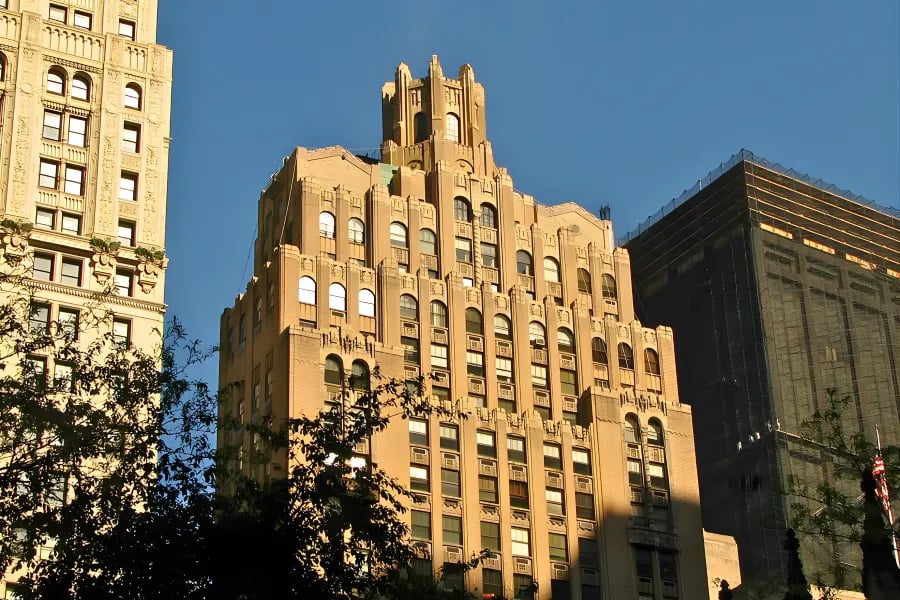
For decades, the Financial District was defined primarily by what happened between nine and five. Today, Lower Manhattan tells a different story.
Historic office towers have become luxury condominiums. New residential buildings have introduced expansive amenity packages. Whole Foods, fitness clubs, restaurants, retail, waterfront parks, and cultural destinations have made everyday life downtown considerably easier.
Danielle Nazinitsky’s buyer-side transaction at One Wall Street, Residence #3703 offers a useful window into that transformation. Danielle represented the buyer of the three-bedroom, three-bathroom corner residence in one of Downtown Manhattan’s most ambitious office-to-residential conversions.
The purchase also demonstrates what buyers need to understand when considering FiDi: downtown value is about more than the apartment. The building, conversion quality, amenities, transportation, monthly costs, location, and long-term ownership picture all matter.
One Wall Street: A New Chapter for a Downtown Landmark
Few buildings illustrate FiDi’s residential evolution as clearly as One Wall Street.
The landmark Art Deco tower was originally designed by architect Ralph Walker for the Irving Trust Company. Its transformation into luxury condominiums preserved defining architectural elements while reworking the property for contemporary residential life.
Residence #3703 sits within that larger story.
The northwest corner home offers three bedrooms and three bathrooms, with abundant natural light, an open chef’s kitchen, substantial closet space, hardwood floors, central air, an in-unit washer/dryer, and private outdoor space. StreetEasy identifies Danielle Nazinitsky of Decode Real Estate as the buyer’s agent for the transaction.
For buyers evaluating high-end FiDi properties, a residence like this represents one of the neighborhood’s central attractions: the opportunity to combine historic Manhattan architecture with contemporary interiors and full-service building amenities.
Why Residential Conversions Matter in FiDi
One Wall Street is part of a much larger downtown trend.
FiDi contains a significant concentration of former commercial buildings that have been adapted for residential use. These conversions have helped transform a district historically dominated by offices into a neighborhood with a substantial residential market.
For buyers, conversions can be particularly interesting because they often offer architectural characteristics that conventional new construction cannot easily reproduce.
Older commercial towers may provide dramatic ceiling heights, substantial windows, landmark façades, distinctive lobbies, and a sense of scale inherited from their original use.
But buyers should not assume every conversion is equal.
The quality of the conversion itself matters. Layout efficiency, soundproofing, HVAC, plumbing, elevators, windows, mechanical systems, common areas, and the integration of residential and commercial spaces should all be examined.
A beautiful historic exterior is only one part of the buying decision.
At One Wall Street, Amenities Extend Beyond the Apartment
One Wall Street also demonstrates how far the luxury-condo amenity model has developed downtown.
The building's private residential amenities span approximately 100,000 square feet. They include a 75-foot indoor SkyPool with an outdoor terrace, private fitness facilities, a 6,500-square-foot co-working space, children's and teen spaces, a canine club, private dining, and a residents-only restaurant and bar.
There is another layer of convenience downstairs.
The property incorporates Whole Foods Market and a four-level Life Time athletic club. Residents receive complimentary Life Time membership and priority access to its approximately 75,000 square feet of fitness and wellness facilities.
That kind of mixed-use environment is important to the broader FiDi residential story.
The neighborhood is no longer relying solely on offices, banks, and weekday restaurants. Grocery, fitness, retail, dining, residential services, and leisure have increasingly become part of everyday downtown life.
Transportation Is One of FiDi’s Biggest Advantages
For many buyers, transportation is one of the strongest arguments for living downtown.
FiDi offers access to an unusually large collection of subway lines, including the 1, 2, 3, 4, 5, A, C, E, J, Z, R and W, depending on where in the neighborhood a buyer lives. Fulton Center and the World Trade Center transportation network add further connections, including PATH service to New Jersey.
That creates flexibility for households where two people commute to different parts of the city.
It also changes how buyers should evaluate location within FiDi. Rather than simply measuring distance to the nearest subway station, buyers can consider which lines they will actually use, whether they need PATH access, and how easily they can reach other parts of Manhattan or Brooklyn.
At One Wall Street, that transportation network is particularly accessible because of the building's central location near Broadway and multiple subway stations.
A Neighborhood Surrounded by Water
FiDi also offers something unusual for Manhattan: easy access to waterfront spaces on multiple sides of the neighborhood.
The Battery provides open space at Manhattan’s southern tip, while the East River waterfront and South Street Seaport offer additional places to walk, dine, and spend time outdoors. Immediately west, Battery Park City adds an extensive waterfront esplanade and public green space along the Hudson.
This gives downtown living a different character from Midtown.
A buyer can live among some of Manhattan's densest commercial architecture while remaining within walking distance of the harbor, riverfront paths, parks, ferries, and views toward New York Harbor.
That contrast—density paired with waterfront access—is an important part of FiDi's residential appeal.
What Buyers Should Understand About Luxury Buildings
Buildings like One Wall Street offer extensive services, but buyers need to evaluate those amenities as part of the total cost of ownership.
A pool, private dining club, concierge, fitness center, children's spaces, co-working facilities, and resident lounges can meaningfully improve daily life. But buyers should still ask how frequently they expect to use them and how those services affect common charges.
The same applies to building quality.
In a major conversion, buyers should understand the offering plan, sponsor history, building financials, common charges, taxes, reserve structure, mechanical systems, alteration policies, insurance, commercial components, and any ongoing or planned capital work.
FiDi adds another consideration: flood resilience.
Lower Manhattan's waterfront location means buyers should understand a building's flood-zone exposure, insurance arrangements, emergency systems, backup power, and any flood-mitigation improvements that have been implemented.
These issues may not be visible during an apartment tour, but they can be just as consequential as the finishes inside the residence.
The FiDi Lifestyle Has Changed
One of the lingering perceptions of the Financial District is that it empties out after office hours.
There is still a noticeable difference between weekday business activity and evenings, and FiDi can feel quieter at night than neighborhoods built around nightlife. For some buyers, that is a drawback. For others, it is precisely part of the appeal.
The broader lifestyle proposition has also expanded.
Stone Street, the Seaport, Battery Park, the Oculus, Brookfield Place and the World Trade Center area create different pockets of dining, shopping, culture and outdoor activity throughout Lower Manhattan. Grocery stores and in-building retail have made practical daily needs easier to handle as well.
Buyers considering FiDi should therefore experience the neighborhood at different times—not only during an afternoon showing.
Walk it on a weekday morning. Return after dinner. Spend time along the waterfront on a weekend.
Understanding that rhythm is part of understanding whether downtown living fits.
Why Local Buyer Representation Matters
Danielle’s representation of the buyer at One Wall Street #3703 demonstrates experience with a particularly complex segment of the FiDi market: high-end residences inside major landmark conversions.
Properties like these require more than comparing bedrooms, bathrooms, and price per square foot.
Buyers may be choosing between a landmark conversion, a newer ground-up condominium, a smaller boutique building, or a property in neighboring Battery Park City. Each can have a very different ownership structure, amenity package, monthly carrying cost, architectural character, and resale profile.
The right comparison is not simply which apartment looks most impressive.
It is which combination of residence, building, location, services, monthly costs and long-term considerations makes sense for that particular buyer.
Buying in FiDi
The Financial District has become one of Manhattan's clearest examples of urban reinvention.
Historic commercial architecture has been given a residential second life. Full-service condominium towers have brought pools, lounges, fitness facilities, co-working spaces and concierge services downtown. Transportation remains one of the neighborhood's defining strengths, while the Battery, Seaport and nearby waterfront provide an outdoor dimension that can be easy to overlook when thinking about Wall Street.
One Wall Street brings many of those changes together in a single address.
Danielle Nazinitsky’s buyer-side transaction at Residence #3703 demonstrates experience navigating this newer version of FiDi where choosing a home means understanding not only the apartment, but the history and quality of the building, its amenities, its downtown location and the practical realities of owning in Lower Manhattan.
For buyers considering FiDi, that context can make the difference between simply purchasing a luxury apartment and choosing a downtown home that works for the way they actually want to live.