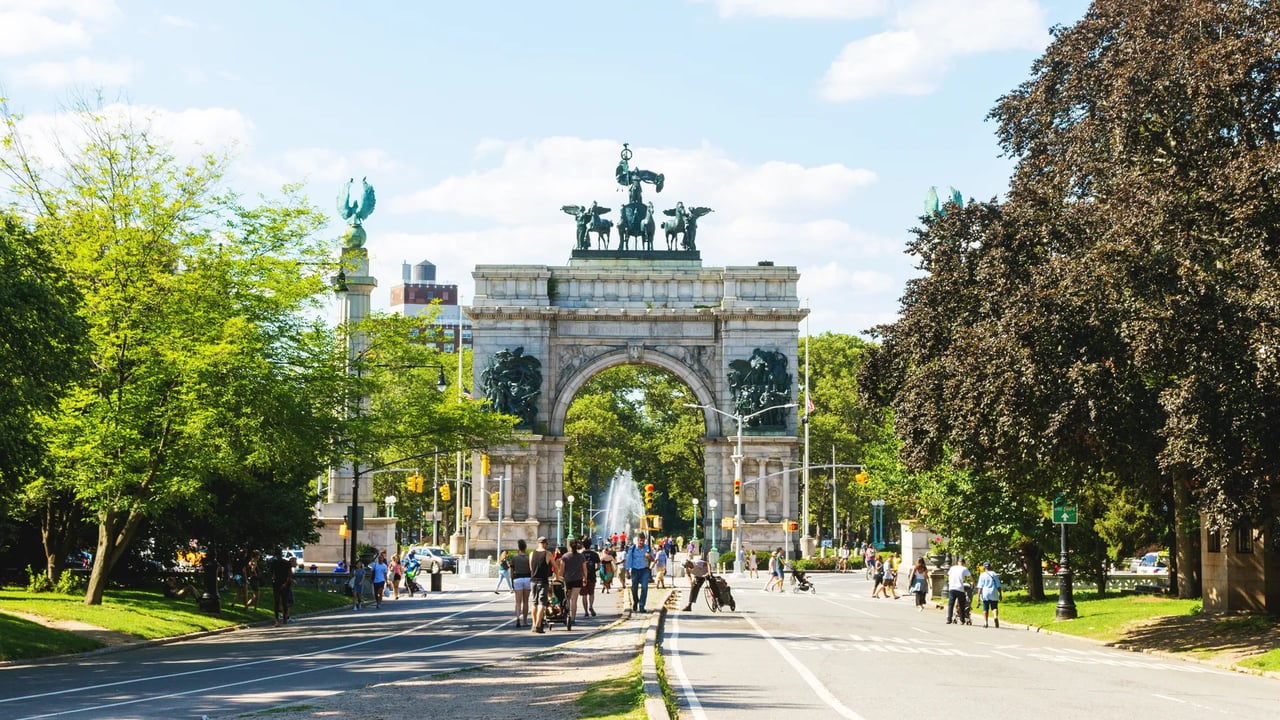
For Brooklyn buyers looking for the right balance of architecture, green space, culture, and connectivity, Prospect Heights continues to make a strong case.
The neighborhood combines historic brownstone blocks with newer condominium developments, while putting residents within easy reach of Prospect Park, the Brooklyn Museum, Brooklyn Botanic Garden, Grand Army Plaza, and some of the borough’s most active dining and retail corridors. It is a combination that gives buyers several very different ways to enter the neighborhood and makes local knowledge particularly valuable.
Danielle Nazinitsky’s buyer-side transaction at 856 Washington Avenue is a good example. Representing a buyer in a modern Prospect Heights condominium requires looking beyond the apartment itself and understanding how the building, location, monthly costs, amenities, and surrounding housing stock compare.
856 Washington Avenue: A Modern Prospect Heights Option
Located near Eastern Parkway, 856 Washington Avenue represents the newer side of the Prospect Heights housing market.
Completed in 2018, the boutique condominium contains 26 residences across 14 stories. Homes range from one-bedroom apartments to expansive penthouses, with features across the building that include oversized windows, hardwood floors, private outdoor space in select residences, and city, park, and skyline views. Building amenities include a gym, roof deck, bike room, elevator, and doorman service.
Its location also illustrates one of Prospect Heights’ biggest advantages. The Eastern Parkway–Brooklyn Museum 2 and 3 subway station is less than 500 feet away, while additional subway connections are available around Botanic Garden, Franklin Avenue, and Grand Army Plaza.
For buyers, however, choosing a property such as 856 Washington Avenue is not simply about selecting a newer condo. It means understanding how that property compares with the many other housing types available within a few blocks.
Historic Brooklyn and New Development in One Neighborhood
Prospect Heights has an unusually broad architectural mix.
The Prospect Heights Historic District contains approximately 850 buildings, primarily row houses and apartment buildings constructed between the mid-19th and early 20th centuries. Italianate, neo-Grec, Renaissance Revival, and Romanesque Revival architecture can all be found throughout the district.
At the same time, newer condominiums have expanded the options available to buyers who prefer elevators, contemporary layouts, central air, amenities, and more predictable maintenance.
That contrast is important when searching here.
A renovated brownstone or townhouse unit might offer original details, distinctive proportions, and a quieter residential setting. A newer condominium may provide better accessibility, modern mechanical systems, amenities, outdoor space, and fewer immediate renovation concerns.
Neither is automatically the better purchase. The right choice depends on how a buyer intends to live and how the property's total cost compares with the alternatives.
Prospect Park Is Part of the Value Proposition
Location within Prospect Heights also changes considerably from block to block.
The neighborhood sits directly north of Prospect Park, with Grand Army Plaza providing one of its major entrances. The Brooklyn Museum, Brooklyn Botanic Garden, and other major cultural destinations are clustered nearby.
For buyers who prioritize outdoor space without wanting to leave central Brooklyn, proximity to Prospect Park can meaningfully influence a property's appeal.
The same is true of the neighborhood’s commercial streets. Vanderbilt Avenue has developed into a particularly active restaurant, café, bar, and retail corridor, while Washington Avenue provides another collection of local businesses and services.
The result is a neighborhood where everyday amenities, cultural destinations, transportation, and green space can all be reached without giving up the residential character of Brooklyn’s historic streets.
What Buyers Should Compare in Prospect Heights
One of the mistakes buyers can make in a neighborhood like Prospect Heights is comparing properties primarily by asking price or price per square foot.
The comparison needs to go deeper.
When Danielle advises buyers in Prospect Heights, factors worth examining include monthly common charges and taxes, building financials, renovation history, layout efficiency, natural light, outdoor space, elevator access, amenities, subway proximity, landmark restrictions, resale potential, and the condition of both the apartment and building.
New-development and newer-resale condos require their own analysis. Buyers should understand what their monthly costs actually provide and whether premium amenities translate into meaningful everyday value.
Historic properties create a different set of questions. Buyers may need to weigh architectural character against maintenance, renovation requirements, building systems, and potential restrictions associated with landmarked properties.
Even two apartments with similar asking prices can represent substantially different ownership experiences.
Why Buyer Representation Matters
Prospect Heights remains popular precisely because it offers so much variety.
That variety can also make purchasing more complicated.
Danielle Nazinitsky brings experience across NYC condos, co-ops, townhouses, and investment properties. Her verified deal history includes hundreds of past sales and rentals, and her work in Prospect Heights spans both historic and contemporary properties.
Recent Prospect Heights activity further demonstrates that range. Danielle has represented buyers of historic housing in the neighborhood and has also worked with newer and renovated condominium inventory.
The buyer-side purchase at 856 Washington Avenue fits within that broader understanding of the neighborhood: evaluating not only whether an apartment works, but how its value, building, location, and long-term ownership considerations compare with everything else Prospect Heights offers.
Buying in Prospect Heights
Prospect Heights has evolved, but the fundamentals behind its appeal remain remarkably consistent.
Buyers get access to historic Brooklyn architecture, newer condominium options, Prospect Park, major cultural institutions, neighborhood restaurants and businesses, and strong transportation connections all within a relatively compact area. StreetEasy currently characterizes the neighborhood as a mix of old and new Brooklyn and reports a median sale price around $1.5 million, reflecting the level of demand the area continues to attract.
For buyers, the opportunity is not simply finding a home in Prospect Heights. It is identifying which part of the neighborhood, building type, ownership structure, and property best align with their priorities.
With experience representing buyers in Prospect Heights including at 856 Washington Avenue Danielle Nazinitsky helps clients evaluate those differences and approach the purchase with a clearer understanding of both the property and the neighborhood around it.