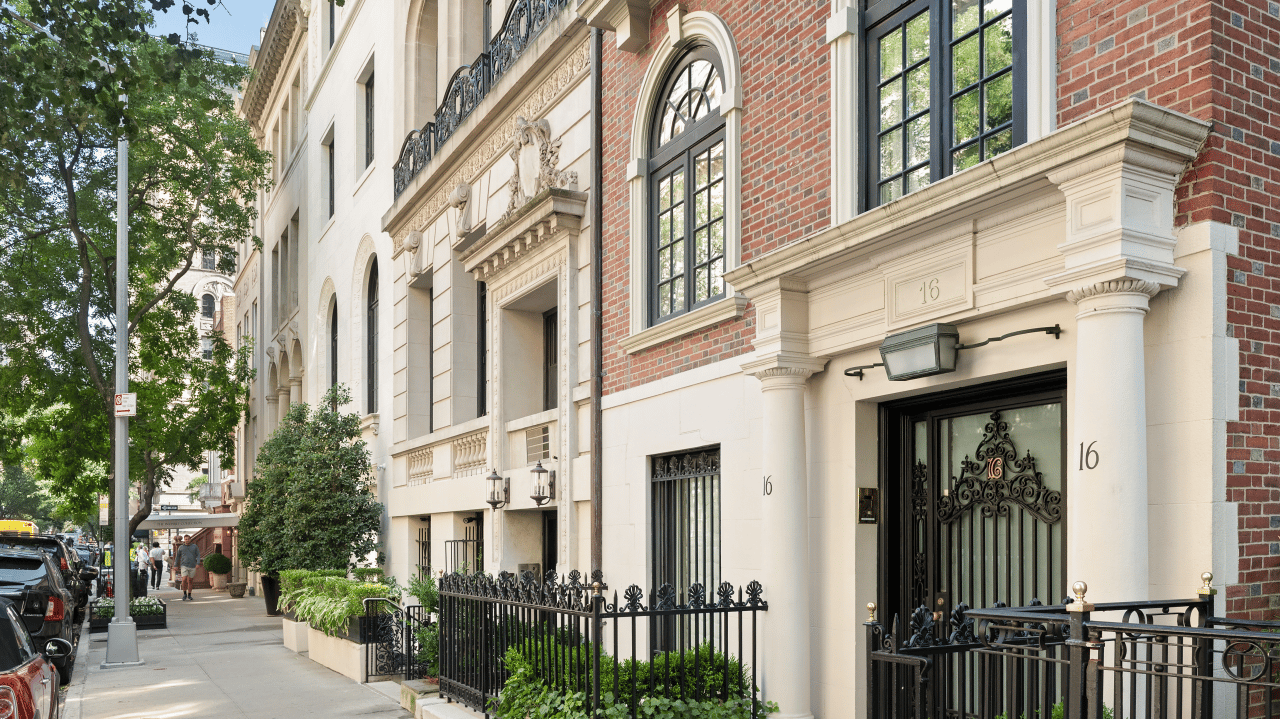
Selling a home in Carnegie Hill requires understanding what makes buyers choose this particular part of the Upper East Side.
The neighborhood is defined by prewar co-ops, historic townhouses, tree-lined side streets and proximity to Central Park and Museum Mile. Unlike markets dominated by new development, Carnegie Hill’s appeal is closely tied to architectural character, established buildings and a quieter residential atmosphere.
That means sellers are rarely competing on newness alone.
Danielle Nazinitsky’s seller-side transaction at 177 East 93rd Street #3B provides a useful example. Danielle represented the seller of the renovated one-bedroom co-op, which closed for $555,000 in March 2026, just below its final $560,000 asking price. The approximately 750-square-foot apartment combined classic prewar character with thoughtful updates a combination that speaks directly to what many Carnegie Hill buyers are looking for.
For sellers, the lesson is important: successfully positioning a classic Upper East Side home means understanding both its history and how today’s buyer wants to live.
177 East 93rd Street #3B: Prewar Character, Presented for Today
177 East 93rd Street is a boutique 1920 co-op with just 16 residences across four stories. It sits on a tree-lined Carnegie Hill block and operates as a self-managed cooperative. The building is a walk-up rather than a full-service elevator property, with laundry, bike storage and resident storage available.
Apartment #3B offered a compelling balance between old and new.
The one-bedroom had north and east exposures, hardwood floors and an unusually generous living area with enough room for a full dining table and substantial seating. Its windowed kitchen and bathroom had been updated, while built-in storage helped address one of the practical considerations buyers often have with older Manhattan apartments.
The property therefore was not being sold simply as a one-bedroom.
It was being positioned around space, light, condition, prewar character and Carnegie Hill location.
That distinction matters when marketing older Upper East Side homes.
Carnegie Hill Buyers Are Often Buying the Neighborhood as Much as the Apartment
Carnegie Hill has a distinctive residential identity.
Prewar apartment buildings, Gilded Age mansions and historic rowhouses line its streets, while major cultural institutions are concentrated along nearby Museum Mile. Central Park defines the neighborhood’s western edge and gives residents easy access to the Jacqueline Kennedy Onassis Reservoir and the park's extensive walking and recreational spaces.
The housing stock reinforces that character.
Large prewar cooperatives dominate portions of Fifth and Park Avenues, while smaller co-ops, townhouses and apartment buildings appear throughout the side streets. New-development inventory is comparatively limited.
For sellers, this means marketing should not treat the apartment as an isolated product.
The block matters. The architecture matters. Central Park matters. The neighborhood's quieter residential rhythm matters.
Those elements help explain why a buyer chooses Carnegie Hill instead of another Upper East Side neighborhood or another part of Manhattan entirely.
Know Which Buyer Your Home Is Likely to Attract
Not every Carnegie Hill property appeals to the same buyer.
A large Park Avenue prewar apartment may attract households prioritizing substantial entertaining spaces, multiple bedrooms and full-service living. A townhouse creates an entirely different proposition.
A one-bedroom like 177 East 93rd Street #3B reaches another segment.
The approximately 750-square-foot layout offers considerably more defined living space than many compact contemporary one-bedrooms. Flexible building policies at 177 East 93rd Street also allow guarantors, co-purchasing, pied-à-terre ownership and subletting, broadening the potential ownership scenarios.
Understanding those characteristics helps determine how a listing should be presented.
The objective is not to make every property appeal to every buyer. It is to communicate clearly with the buyers most likely to value what the home actually offers.
Prewar Character Is an Asset—When Buyers Can See It
Carnegie Hill buyers often appreciate features that would not necessarily headline a new-development listing.
Generous room proportions, hardwood floors, windowed kitchens, architectural details, multiple exposures and defined dining areas can all help differentiate an older apartment.
Sellers should make those qualities immediately visible.
Photography should communicate room scale rather than making spaces look artificially wide. Furniture should demonstrate how the layout works. If a living room can accommodate both dining for six and a substantial seating area as #3B could that functionality deserves to be shown rather than buried in the listing description.
The same principle applies to original details.
Restored hardwood, moldings, doors and other prewar features should feel intentional. Buyers need to see character, not simply age.
Condition Changes the Buyer Conversation
Prewar charm alone will not compensate for obvious deferred maintenance.
Today's buyer may appreciate historic architecture while still expecting functional kitchens, bathrooms, electrical systems and storage.
This makes condition an important part of seller strategy.
At #3B, the updated windowed kitchen and bathroom allowed the apartment to retain its prewar identity while presenting a more contemporary ownership experience.
Sellers do not necessarily need to undertake a complete renovation before listing. In some situations, that investment may not generate an adequate return.
Smaller improvements can still have a meaningful effect: refinishing floors, painting, repairing damaged trim, updating lighting, decluttering, improving hardware and addressing visibly neglected maintenance.
The goal is to remove distractions so buyers can concentrate on the apartment's strongest attributes.
Pricing Has to Reflect the Building, Not Just the ZIP Code
Carnegie Hill contains an unusually wide range of property values.
StreetEasy currently reports a neighborhood median sale price around $1.3 million, but that figure spans very different types of homes.
Within 177 East 93rd Street itself, recent sales illustrate why sellers need more precise comparisons. The building contains studios and one-bedrooms, and historical transactions vary based on size, floor, condition and market timing. #3B ultimately closed at $555,000, or approximately $740 per square foot.
A seller therefore should not price a smaller walk-up co-op by simply looking at a luxury Fifth Avenue building a few blocks away.
Useful comparables need to account for property type, building services, floor level, elevator access, condition, layout, monthly maintenance, exposure and location.
Pricing is also part of marketing.
An unrealistic asking price can cause an otherwise attractive apartment to sit on the market long enough for buyers to start wondering what is wrong with it.
Walk-Up Homes Need the Right Positioning
177 East 93rd Street does not have an elevator or doorman.
That creates an obvious tradeoff.
Some buyers will immediately exclude walk-ups. Trying to persuade them otherwise is rarely productive.
The better strategy is to emphasize what buyers receive in exchange: a boutique building, residential block, potentially lower operating complexity than a full-service property, and an apartment whose space or price may compare favorably with more amenity-heavy alternatives.
Floor level matters as well.
Higher walk-up apartments may offer better light, quieter interiors and greater privacy, but the stairs need to be reflected realistically in pricing and positioning.
Good marketing does not hide a property's compromises.
It establishes why the tradeoff may make sense for the right buyer.
Central Park Is Part of the Value Proposition
Carnegie Hill's relationship with Central Park is another important selling point.
The neighborhood runs along the park's eastern side, placing residents near the Reservoir and other entrances and recreational areas. StreetEasy describes Central Park access as one of Carnegie Hill's defining advantages.
For sellers, this deserves more than a generic “close to Central Park” sentence.
Marketing should help buyers understand the everyday experience.
Morning runs around the Reservoir, weekend walks, playgrounds, green space and easy access to Museum Mile collectively add another layer to living in the neighborhood.
The apartment provides the private space.
Carnegie Hill provides the larger lifestyle around it.
Presentation Should Match the Carnegie Hill Buyer
A classic Upper East Side property should be presented with an understanding of why buyers are searching in the neighborhood.
Over-staging can work against a prewar home if it removes all sense of architectural identity. Under-preparing it can make original character look like deferred maintenance.
The strongest presentation sits between those extremes.
Rooms should feel clean, intentional and spacious. Architectural details should remain visible. Window treatments should maximize natural light. Furniture should clarify scale and function rather than crowding rooms.
The listing copy should be equally specific.
Instead of generic luxury language, sellers benefit from emphasizing tangible qualities: multiple exposures, room dimensions, windowed kitchens and bathrooms, dining capacity, storage, building policies, block character, Central Park proximity and transportation.
Those details help buyers understand why one Carnegie Hill apartment differs from another.
Co-op Sellers Need to Think Beyond the Accepted Offer
Carnegie Hill's substantial co-op inventory introduces another consideration: the transaction does not end when a buyer makes an acceptable offer.
The buyer must also satisfy the building's financial and approval requirements.
Sellers should understand their building's standards before going to market so that offers can be evaluated not only on price but also on their likelihood of completing the co-op approval process.
That may include reviewing the buyer's financing structure, liquidity and overall financial profile with the seller's attorney and brokerage team.
At the same time, building policies vary considerably.
177 East 93rd Street, for example, permits guarantors, co-purchasing, pied-à-terre ownership and subletting—features that can materially broaden the potential buyer pool compared with more restrictive cooperatives.
Those policies are marketing assets and should be communicated clearly.
Why Seller Representation Matters in Carnegie Hill
Danielle Nazinitsky's representation of the seller at 177 East 93rd Street #3B demonstrates direct experience marketing and selling classic Carnegie Hill housing. StreetEasy identifies Danielle and Decode Real Estate as the seller's agent for the transaction.
The property is a useful example because it was not relying on trophy-building amenities or new-development finishes.
Its value proposition came from something more characteristic of Carnegie Hill: a renovated prewar home with generous proportions inside an intimate co-op on a residential Upper East Side block.
Selling that kind of property requires knowing how to translate qualities that may feel familiar to an owner into benefits a buyer immediately understands.
Selling in Carnegie Hill
Carnegie Hill's enduring appeal comes from qualities that cannot easily be recreated.
Its historic housing stock, established residential streets, Central Park access and concentration of cultural institutions give the neighborhood a distinct position within the Upper East Side. Its limited supply of new development further reinforces the importance of existing prewar homes.
For sellers, however, neighborhood demand alone is not a strategy.
The home still needs to be priced correctly, prepared carefully and positioned for the buyer most likely to appreciate its particular combination of space, condition, architecture and location.
Danielle Nazinitsky's seller-side transaction at 177 East 93rd Street #3B demonstrates that approach in practice: presenting a renovated one-bedroom around its generous layout, prewar character and Carnegie Hill setting, then bringing the transaction to a $555,000 close.
For Carnegie Hill sellers, Danielle brings direct experience with the central question behind a successful listing: not simply what the property is, but which buyers will value it—and how to position the home so they understand why.