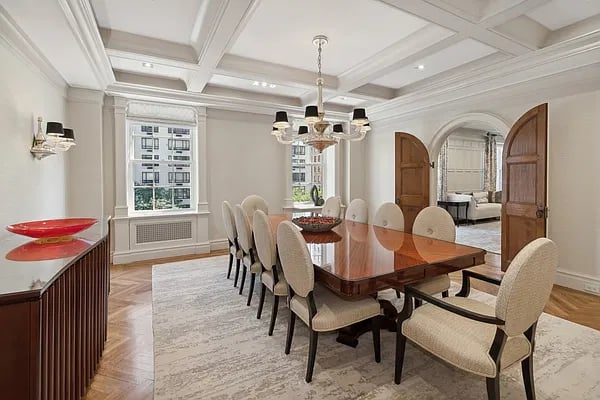
An inside look at 136 East 64th Street #11E and what buyers should consider when purchasing a classic Upper East Side cooperative.
Lenox Hill has long been one of Manhattan's most desirable residential neighborhoods. Known for its elegant prewar buildings, tree-lined streets, and proximity to Central Park, it offers a style of New York living that combines architectural character with modern convenience.
For buyers, however, purchasing a prewar cooperative in Lenox Hill involves more than finding an apartment with high ceilings and beautiful original details. From board approvals and financing restrictions to monthly maintenance and building financials, several factors can influence both the buying process and long-term ownership experience.
The purchase of 136 East 64th Street #11E, where Danielle Nazinitsky and Jeremy Kamm of Decode Real Estate represented the buyer, offers an example of the considerations involved in navigating this distinctive market.
The three-bedroom cooperative closed for $2.3 million in July 2026, highlighting an opportunity within one of the Upper East Side's established residential buildings.
The Appeal of Prewar Living in Lenox Hill
One of the defining characteristics of Lenox Hill real estate is its collection of prewar cooperative buildings. Many were constructed during the early twentieth century, when residential architecture emphasized generous room proportions, formal entertaining spaces, detailed craftsmanship, and long-lasting materials.
Unlike many contemporary apartments designed around open-plan living, prewar residences often feature separate dining rooms, defined entry galleries, spacious living areas, and private bedroom wings.
These layouts continue to attract buyers who value architectural character without sacrificing everyday functionality.
Located between Park and Lexington Avenues, 136 East 64th Street reflects this residential tradition. Built in 1928 and designed by architect George F. Pelham, the cooperative features classic prewar architecture and the services associated with an established Upper East Side building.
Apartment 11E offers a classic seven-room layout with three bedrooms, three bathrooms, and an additional flexible room. Architectural features include herringbone hardwood floors, a wood-burning fireplace, high ceilings, and separate formal living and dining spaces.
For buyers who appreciate traditional Manhattan architecture, these details can offer something that is difficult to reproduce in newer developments.
Still, architectural charm should be only one part of the purchasing decision.
Understanding Co-op Board Requirements
Buying a cooperative apartment is different from purchasing a condominium.
In a co-op, buyers purchase shares in the corporation that owns the building and receive a proprietary lease granting the right to occupy their apartment. This ownership structure gives the cooperative board an important role in the approval process.
Most co-op boards require buyers to submit a detailed application that may include financial statements, tax returns, employment verification, reference letters, and information about outstanding liabilities.
Some buildings also impose strict requirements regarding down payments, debt-to-income ratios, and post-closing liquidity.
These requirements vary significantly across Manhattan cooperatives, even within the same neighborhood.
A buyer who qualifies for one building may not necessarily meet the financial criteria of another.
That is why understanding a building's purchasing policies before submitting an offer is essential.
For Danielle Nazinitsky, whose professional background includes finance and accounting, evaluating the financial side of a transaction is a relevant part of her approach to buyer representation.
In a market where financial readiness can be as important as the offer itself, helping buyers understand cooperative requirements can make the process more efficient and predictable.
Financing a Prewar Co-op: What Buyers Need to Know
Financing is another area where cooperative purchases differ from condominium transactions.
Although a lender may approve a buyer for a mortgage, the cooperative board can have its own restrictions on the amount of financing permitted.
For example, some buildings allow buyers to finance a substantial portion of the purchase price, while others require larger down payments.
Co-ops may also expect buyers to retain sufficient liquid assets after closing to cover a specified period of housing expenses.
These reserves provide assurance that shareholders can continue meeting their financial responsibilities even if their circumstances change.
Buyers should review several factors early in the process:
The building's maximum permitted financing percentage
Minimum down payment expectations
Debt-to-income requirements
Post-closing liquidity requirements
Lender eligibility and building approval policies
A mortgage preapproval is an important first step, but it does not guarantee that a buyer will satisfy a particular cooperative's financial guidelines.
Understanding the relationship between lender requirements and building policies helps buyers focus on properties they can realistically purchase.
Monthly Maintenance and the True Cost of Ownership
One of the most important considerations when evaluating a prewar co-op is monthly maintenance.
Unlike condominium owners, who typically pay common charges and property taxes separately, cooperative shareholders generally pay maintenance that includes their allocated share of the building's operating expenses and real estate taxes.
Depending on the property, maintenance may cover building staff, insurance, heating, common-area upkeep, repairs, and underlying building expenses.
At 136 East 64th Street #11E, the published monthly maintenance at the time of listing was approximately $6,256.
That represents more than $75,000 annually in maintenance expenses, excluding mortgage payments and any additional assessments.
For buyers comparing apartments, this illustrates why the purchase price alone does not tell the full financial story.
A property with a lower asking price may carry higher ongoing costs, while another apartment with more substantial maintenance could offer services or building features that justify the difference.
The key is understanding what the maintenance includes and how the building manages its finances.
Buyers should review the cooperative's financial statements, reserve funds, maintenance history, underlying debt, and any anticipated capital improvements.
These details can provide important context about the building's financial stability and potential future expenses.
Evaluating Building Quality and Service Levels
The apartment itself is only one part of a cooperative purchase.
In established Upper East Side buildings, the quality of management, maintenance, and resident services can significantly influence the ownership experience.
Many Lenox Hill buyers specifically seek full-service buildings with doormen, live-in superintendents, elevator access, package handling, and attentive building staff.
136 East 64th Street offers a traditional residential service environment, including full-time doorman service and building staff.
For some buyers, these conveniences are essential. For others, a smaller building with fewer services and potentially lower operating costs may be more appropriate.
Beyond amenities, buyers should also consider the physical condition of the building.
Prewar properties can require ongoing investment in façades, roofs, elevators, plumbing, heating systems, and other infrastructure.
A well-maintained building with responsible financial management can provide greater long-term confidence than one that has deferred significant capital improvements.
Before purchasing, buyers and their attorneys should review available building documents, including financial reports, board minutes, and relevant disclosures.
A beautiful apartment becomes a stronger investment when the building supporting it is equally well maintained.
Why Prewar Floor Plans Deserve Closer Attention
One of the strongest selling points of prewar apartments is their layout.
Classic six- and seven-room residences were designed around a more traditional separation of living spaces. Formal entertaining rooms were often positioned away from bedrooms, while kitchens and secondary rooms provided dedicated service or work areas.
Today, these layouts offer opportunities for buyers seeking flexible living arrangements.
At 136 East 64th Street #11E, the formal gallery, separate living and dining rooms, and private bedroom areas create a clear distinction between social and personal spaces.
The additional flexible room may also provide useful options for a home office or other permitted purposes.
However, not every prewar layout works equally well for modern living.
Some apartments have smaller kitchens, limited closet space, unconventional circulation, or structural limitations that make renovation challenging.
Buyers should consider how comfortably the floor plan supports their daily routines rather than focusing only on the number of rooms.
Natural light, room dimensions, ceiling heights, storage, privacy, and renovation potential should all influence the evaluation.
An intelligently planned apartment can often deliver greater everyday value than a larger residence with less functional space.
Making a Competitive Offer in the Lenox Hill Market
Pricing a prewar cooperative requires careful evaluation.
Unlike newer condominium developments, where apartments may share similar layouts and finishes, prewar co-ops can vary considerably from one residence to another.
Floor level, exposures, renovation quality, ceiling height, architectural details, monthly maintenance, and building reputation can all influence value.
That makes comparable sales particularly important.
At 136 East 64th Street #11E, the apartment's final published asking price was $2.475 million, while the recorded closing price was $2.3 million.
The approximately 7% difference between the last asking price and the final sale price illustrates why buyers should evaluate market evidence instead of assuming the asking price represents the property's exact value.
The public transaction record does not disclose the specific negotiations, but it provides a useful example of the importance of pricing analysis.
A competitive offer is not necessarily the highest offer.
In the cooperative market, sellers also consider the buyer's financial strength, financing structure, readiness to complete the board package, and overall ability to close.
A well-prepared buyer with a clearly documented financial position can offer sellers greater confidence throughout the transaction.
This is where experienced buyer representation becomes especially valuable.
An effective strategy combines comparable sales, property-specific analysis, building requirements, and an understanding of what matters most to the seller.
The Importance of Local Knowledge in Lenox Hill
Even within Lenox Hill, cooperative buildings can differ dramatically.
Two apartments on nearby streets may offer similar square footage but completely different ownership experiences.
One building may permit more financing, while another requires substantial cash reserves. Some cooperatives have more restrictive renovation policies, subletting guidelines, or ownership requirements.
Service levels, maintenance structures, building financials, and architectural layouts can also vary.
These differences are not always obvious from online listings.
For buyers entering the Upper East Side market, working with an agent who understands cooperative ownership and neighborhood-specific property characteristics can help make the search more focused.
Danielle Nazinitsky, founder and CEO of Decode Real Estate, brings a finance-oriented perspective to New York City residential transactions.
Her representation of the buyer at 136 East 64th Street #11E, alongside Jeremy Kamm, demonstrates her involvement in the Lenox Hill cooperative market.
For buyers considering prewar residences, that combination of transaction experience and financial understanding is particularly relevant.
The objective is not simply to identify an attractive apartment, but to help buyers evaluate whether the property, building, and ownership structure align with their financial position and long-term goals.
Buying With Confidence in Lenox Hill
Prewar cooperatives remain an important part of what makes Lenox Hill such a desirable residential neighborhood.
Their architectural details, spacious layouts, established buildings, and traditional services offer a distinctive alternative to contemporary Manhattan living.
But purchasing one successfully requires a careful balance of lifestyle priorities and financial due diligence.
Understanding co-op board requirements, evaluating financing options, reviewing monthly maintenance, assessing building quality, and developing an informed offer strategy are all essential steps.
The transaction at 136 East 64th Street #11E is a reminder that the right purchase involves more than choosing the right address. It requires understanding everything that comes with ownership.
For buyers exploring Lenox Hill and the broader Upper East Side, Danielle Nazinitsky and the Decode Real Estate team offer buyer representation informed by New York City market experience and financial considerations.
Thinking about buying a prewar co-op in Lenox Hill?
Connect with Danielle Nazinitsky and Decode Real Estate to explore properties, understand cooperative purchasing requirements, and approach your next move with a well-informed strategy.