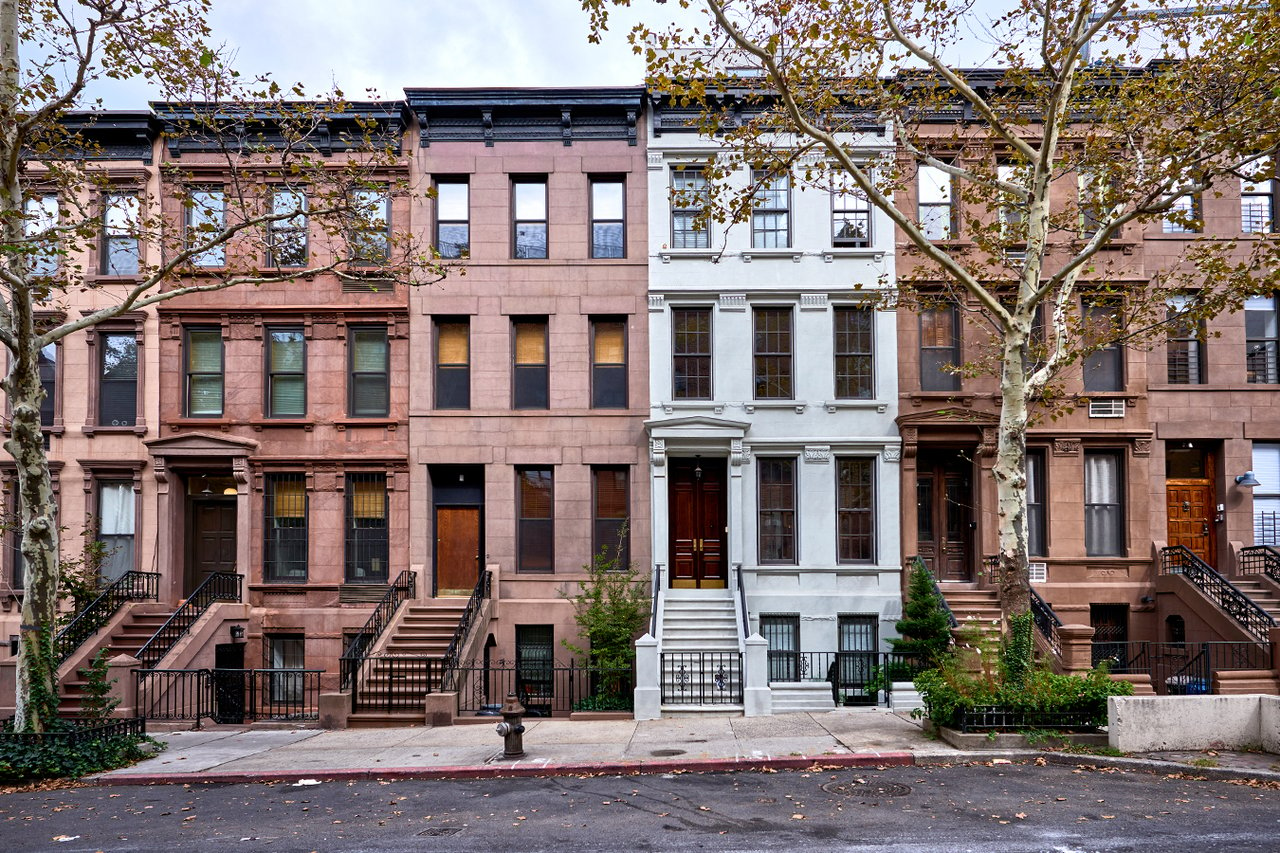
Buying a townhouse in Crown Heights is very different from buying a condo or co-op. You’re not only evaluating the rooms you can see you’re taking responsibility for the building itself.
That distinction is central to how Danielle Nazinitsky approaches townhouse purchases in Brooklyn.
Her buyer-side work at 736 Lincoln Place is a useful example. The property is a 1901 brick, two-family home in Crown Heights, with approximately 1,936 square feet across two stories. Public records show that it sold for $2.95 million in June 2026.
What makes a property like this interesting isn't simply the closing price. It's everything a buyer needs to understand before getting there.
Looking Beyond the Renovation
Before the sale, permits were filed for interior renovations involving partitions and mechanical work across the basement, first floor and second floor, along with a new bulkhead. The work did not change the building's two-family use or occupancy.
For Danielle, this is where townhouse due diligence becomes more important than surface-level finishes.
A renovated kitchen or beautifully restored parlor can make a strong first impression, but a buyer also needs to understand what happened behind the walls: plumbing, electrical systems, heating and cooling, roofing, waterproofing, structural conditions and whether previous work was properly permitted.
That matters even more in Crown Heights, where buyers are often considering homes that are more than a century old.
Understanding the Two-Family Layout
736 Lincoln Place is legally classified as a two-family property.
That creates possibilities a conventional apartment doesn't offer. A buyer might occupy the entire house, maintain two separate residences, or use one unit to create rental income, subject to applicable laws and the property's legal configuration.
But Danielle's role isn't simply to point out that flexibility. It is to help a buyer understand whether the layout actually works for their life and their long-term plans.
Where are the bedrooms? How independent is the second unit? How does circulation work between floors? Would combining spaces require additional approvals? Does today's configuration still make sense five or ten years from now?
Those questions turn a floor plan into an ownership strategy.
Evaluating the Block, Not Just the House
Townhouse value is unusually sensitive to location at the block level.
At 736 Lincoln Place, buyers are close to several subway options, including the 3 at Nostrand Avenue, the 2/5 at President Street and the major Franklin Avenue transit connection.
But Danielle's evaluation of a Brooklyn townhouse goes beyond drawing a radius around the nearest subway station.
The character of the block, surrounding housing stock, traffic, neighboring properties, nearby development and how the street feels at different times of day can all affect the experience of owning the home—and eventually selling it.
Two townhouses only a few blocks apart can present very different ownership propositions.
Historic Character vs. Future Maintenance
The appeal of Crown Heights is closely tied to its historic housing stock. Original masonry, stoops, moldings, fireplaces, woodwork and traditional proportions can give these homes a character that newer construction rarely replicates.
Those details also come with responsibility.
Older roofs, foundations, façades, sewer lines, electrical systems and mechanical equipment can turn into significant capital projects. A smart buyer therefore needs to separate cosmetic renovation from building-level condition.
Danielle's buyer representation reflects that broader view of the transaction. Her clients describe her as helping coordinate not only negotiations but also attorneys, inspectors, lenders and contractors throughout the purchase process. One Brooklyn townhouse buyer specifically noted that she continued helping with contractors and practical questions about townhouse ownership even after closing.
Buying for the Next Ten Years
A Crown Heights townhouse shouldn't be evaluated only on whether it works today.
The stronger question is what the property allows you to do over time.
Can the layout evolve with a growing household? Is there meaningful renovation potential? Does the two-family configuration provide useful flexibility? What major building systems could require investment? And will the location, architecture and configuration continue to appeal to future buyers?
That long-term thinking fits Danielle's broader approach to real estate. Her background includes finance and accounting, and her work emphasizes helping clients evaluate purchases as long-term investment decisions rather than treating the process as simply finding an attractive listing.
With hundreds of verified transactions and a dedicated focus on Brooklyn townhouses, Danielle brings both transaction experience and ownership perspective to these decisions.
For a Crown Heights buyer, that expertise matters.
The goal isn't simply to find a beautiful townhouse.
It's to understand the building, the block, the renovation history, the legal configuration, the systems you're inheriting and what ownership will actually look like after the keys are handed over.