Buying in Park Slope is rarely just a question of finding the right apartment. It is a question of finding the right combination of home, building and block.
That distinction matters here. Park Slope stretches across enough of Brooklyn that two homes with similar square footage can offer very different day-to-day experiences. Proximity to Prospect Park, the walk to the subway, the energy of Fifth or Seventh Avenue, building type, light, condition and even which side of a particular street you are on can change both how a property lives and how buyers value it.
For buyers, understanding those differences is where local experience becomes particularly useful.
A Park Slope Purchase in Practice: 497 12th Street
One transaction that illustrates this is Danielle Nazinitsky’s representation of the buyer at 497 12th Street #1R.
Danielle represented the buyer when the residence sold in January 2021. The property was a prewar condominium duplex with two bedrooms, one-and-a-half baths and a private garden, combining original architectural character with renovated living space.
The building itself is intimate: a four-story, eight-unit prewar condominium dating to 1920. It sits between Eighth Avenue and Prospect Park West, placing it exceptionally close to Prospect Park while remaining within a short walk of the F and G trains.
That purchase represents the kind of trade-off Park Slope buyers make all the time. Instead of evaluating square footage alone, the decision includes outdoor space, building scale, ownership structure, condition, transportation and the value of having the park effectively at the end of the block.
Danielle's experience in the neighborhood extends beyond a single closing. Her current real estate work identifies Park Slope as one of her core NYC markets, and a past client specifically describes working with her to purchase a Park Slope condo, noting her familiarity with buildings they were considering and her guidance through negotiation, financing, inspections and closing.
There Is More Than One Park Slope
One of the biggest mistakes buyers make is treating Park Slope as a single market.
It isn't.
The neighborhood contains distinct micro-markets. StreetEasy similarly describes North, Center and South Slope as offering different experiences and notes the difference between living close to Prospect Park and closer to commercial corridors such as Fifth Avenue.
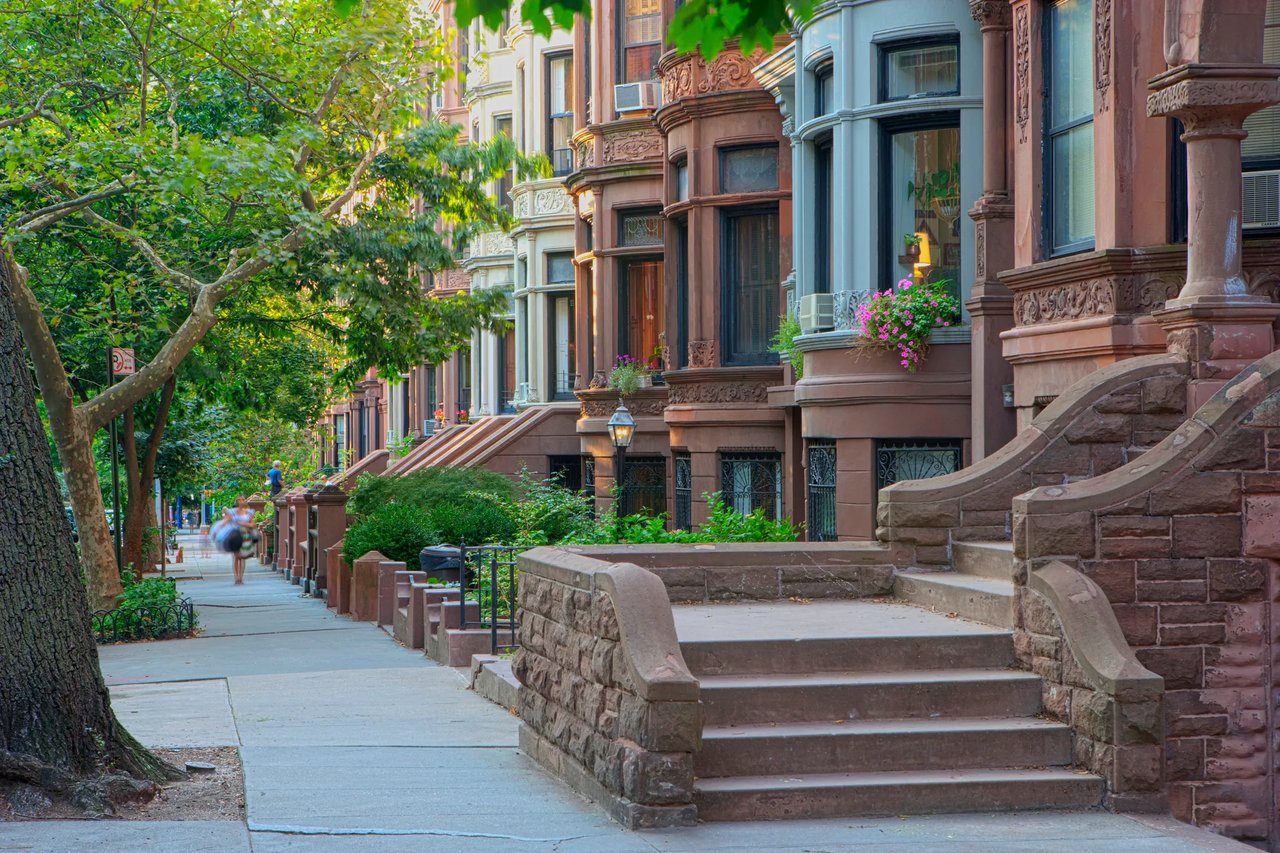
Closer to Prospect Park, the atmosphere becomes more residential. Tree-lined brownstone blocks, quieter evenings and immediate park access are a large part of what buyers are paying for.
Move toward Seventh Avenue and you gain easier access to neighborhood shops, restaurants, cafés and everyday services while still retaining the classic residential character associated with Park Slope.
Around Fifth Avenue, the experience becomes more energetic and commercial. For some buyers, being able to step outside and immediately reach restaurants, coffee shops and stores is a major advantage. For others, another avenue toward the park is worth the walk.
Fourth Avenue introduces another housing profile altogether, including a greater concentration of newer condominium development.
Then there is the north-to-south difference. North and Central Park Slope generally command higher asking prices than South Slope; current market data also shows meaningful differences between these submarkets rather than one uniform Park Slope price.
The practical lesson is simple: compare a property with the homes buyers would realistically choose instead—not with every property carrying a Park Slope address.
Start With the Block, Not the Listing Photos
When I work with a Park Slope buyer, I want to understand how they expect to use the neighborhood.
Do you run in Prospect Park every morning?
Do you want restaurants and coffee within a minute of your front door?
How important is the subway commute?
Would you rather have a quieter block if it means walking farther for groceries?
Are you comfortable with a walk-up?
Does private outdoor space matter more than an elevator?
Those answers quickly change which properties make sense.
Prospect Park is particularly important to the equation. At 526 acres, it is not simply a neighborhood amenity; for many residents it functions as their backyard, exercise space and weekend destination.
The same applies to retail. Fifth and Seventh Avenues are Park Slope's principal commercial corridors, while the side streets are predominantly residential.
A buyer therefore needs to decide where they want to sit between those two advantages: park access and commercial convenience.
497 12th Street is a useful example. Its location near Prospect Park creates a very different proposition from an otherwise comparable condo several avenues west. The latter might offer newer construction or different transportation access; the former gives the buyer something that cannot be renovated into an apartment later: location.
Condo, Co-op or Townhouse?
Park Slope gives buyers unusually varied housing choices.
StreetEasy data cited in its neighborhood guide showed that condos represented 48% of homes available for sale in July 2024, co-ops 22%, and townhouses 12%. The neighborhood includes everything from ornate historic brownstones to prewar apartment buildings and newer condominium developments.
The right ownership type depends on the buyer.
Condos can appeal to buyers who prioritize flexibility. The purchasing process generally involves fewer board restrictions than a co-op, and policies around future renting or resale may be more accommodating. But buyers still need to examine common charges, taxes, building finances, insurance, reserves and upcoming capital work.
Co-ops can provide compelling value and access to beautiful prewar housing stock. The trade-off is greater scrutiny of building rules and financial requirements. Maintenance, sublet policies, board requirements and the building's underlying finances deserve as much attention as the apartment itself.
Townhouses offer privacy, scale and control that apartments cannot replicate. They also make the buyer responsible for the building. Roofs, façades, mechanical systems, waterproofing, structural conditions and renovation history can turn an apparently attractive purchase into a very different financial proposition.
There is no universally "best" Park Slope property type.
There is only the structure that best matches how you want to live, how much responsibility you want and what you want the property to do for you over time.
Condition Can Matter More Than Price Per Square Foot
Buyers understandably want to compare price per square foot. It is useful—but only to a point.
A renovated two-bedroom condo with good light, efficient proportions and outdoor space is not necessarily comparable to an apartment of identical size requiring a full renovation.
In Park Slope's older housing stock, condition requires particular attention.
Buyers should look beyond countertops and finishes and understand windows, plumbing, electrical systems, heating and cooling, waterproofing, roof history and façade work. In a townhouse, those questions expand to the entire structure. In a condo or co-op, they extend to the building's financial health and responsibility for future repairs.
Layout matters too.
A smaller apartment with usable rooms, strong light and good circulation can live substantially better than a larger home with awkward proportions or wasted space.
The garden duplex at 497 12th Street demonstrates the point. Its appeal wasn't simply a bedroom count. The combination of duplex living, prewar details, renovated interiors and private outdoor space created a much more specific proposition.
Transportation Should Be Tested, Not Assumed
Park Slope has broad transit access, but convenience varies considerably depending on the block.
The neighborhood is served by multiple subway lines, while different sections naturally orient toward different stations.
A map can tell you that a train is nearby. It cannot tell you whether you will enjoy making that walk twice every weekday.
Before making an offer, walk from the property to the station you would actually use. Do it at the time you normally commute if possible.
Then walk from the apartment to the places that will form your routine: the park, grocery store, gym, school, coffee shop or restaurant corridor.
You are not simply purchasing the interior of the home. You are purchasing those repeated walks.
How I Think Park Slope Buyers Should Compare Value
Instead of asking, "Is this a good price for Park Slope?" start with a more precise question:
Is this a good value for this type of home, on this block, in this condition, within this type of building?
That means comparing:
location and proximity to Prospect Park;
subway access;
condo, co-op or townhouse ownership;
building financials and monthly carrying costs;
renovation level and future capital needs;
floor, exposure and natural light;
outdoor space;
layout efficiency;
elevator versus walk-up living;
retail access; and
realistic resale appeal.
Those factors explain why two seemingly similar Park Slope properties can trade very differently.
As of August 2026, Realtor.com reported a Park Slope median listing price of approximately $1.695 million, but its data also showed different medians for North, Central and South Slope. A neighborhood-wide number is therefore useful as context, not as a valuation for an individual home.
Choosing the Right Park Slope Home
The best Park Slope purchase is not necessarily the biggest apartment, newest renovation or lowest price per square foot.
It is the property where the compromises line up with your priorities.
For one buyer, that could mean sacrificing an elevator to live half a block from Prospect Park. For another, it could mean choosing a newer condo closer to Fourth Avenue. Someone else may accept renovation work to get into a beautiful prewar co-op, while a townhouse buyer may prioritize long-term control and space.
My role as a buyer's agent is to help separate the features that look compelling in a listing from the factors that will actually determine whether a home works—and whether the price makes sense.
Having represented buyers in Park Slope, including the purchase at 497 12th Street, I know how much those details matter once you move from browsing listings to choosing a home.
Because in Park Slope, you are never buying just an apartment or townhouse.
You are buying the building, the block and the version of the neighborhood that comes with them.