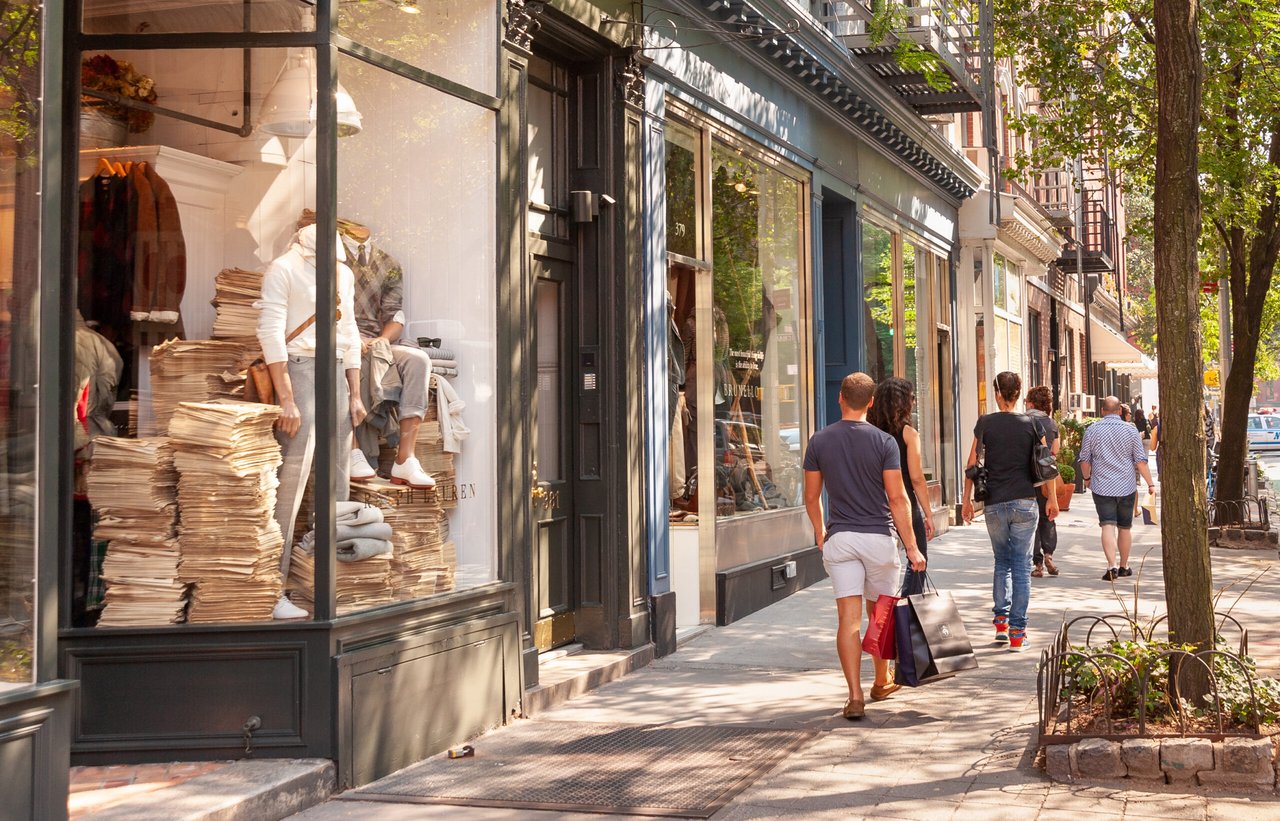
Few Manhattan neighborhoods generate the same level of buyer interest as the West Village.
Its tree-lined streets, historic architecture, independent restaurants, waterfront access, and distinctive low-rise character have created a residential market where demand regularly meets a limited supply of homes. Buyers are often not choosing between dozens of comparable apartments. They are deciding which compromises they are willing to make to live in a neighborhood where the right property can be difficult to replace.
Danielle Nazinitsky’s buyer-side transaction at 22 Perry Street #2B demonstrates that dynamic particularly well.
Danielle represented the buyer of the 457-square-foot studio condominium, which closed for $725,000 on February 25, 2026, after being listed for $800,000. The apartment offered hardwood floors, a fireplace, dishwasher, city views, and a location on one of the West Village’s most recognizable residential streets.
The purchase highlights an important reality of buying here: in the West Village, buyers are frequently paying as much for scarcity, architecture, and location as they are for square footage.
22 Perry Street: Buying Into the West Village
22 Perry Street sits between Waverly Place and West 4th Street, in the heart of the West Village.
The condominium is a relatively intimate building with approximately 20 residences. Unlike the Federal and Greek Revival townhouses commonly associated with the neighborhood, 22 Perry is a later addition to the streetscape. Village Preservation identifies it as a building dating to the 1980s within the Greenwich Village Historic District and notes its distinctive conical roof, which has earned it the nickname the “Witch’s Hat” building.
Its architecture reflects one of the interesting realities of West Village real estate: even comparatively newer buildings have had to respond to a historic architectural context.
Residence #2B presented another distinctly West Village proposition.
At 457 square feet, the studio was compact. But it was also a condominium rather than a co-op, located on Perry Street, with an elevator and laundry in the building and character inside the apartment.
For the buyer Danielle represented, the transaction illustrates the kind of decision buyers routinely face here: how much space are you willing to trade for the right block, building type, ownership structure, and neighborhood?
Why West Village Inventory Is So Limited
Scarcity is fundamental to understanding West Village pricing.
Much of the neighborhood is protected by historic-district regulations, its streetscape is overwhelmingly low-rise, and opportunities for large-scale new residential development are limited. Unlike parts of Manhattan where new towers can introduce hundreds of apartments at once, the West Village housing supply cannot expand nearly as easily.
Long ownership periods further restrict turnover.
The result is a market where certain combinations—renovated apartments on desirable blocks, larger condos, townhouses, apartments with outdoor space, or homes with strong light and views—can be particularly difficult to replace.
Recent 2026 market data illustrates that scarcity. Realtor.com reported 169 active West Village listings in September 2026, down more than 22% year over year, with a median sold price of approximately $1.67 million.
Scarcity does not mean every apartment automatically sells immediately or above asking. Condition, pricing, layout, building quality, and monthly costs still matter.
What scarcity does mean is that buyers need to understand when a property's combination of attributes is genuinely difficult to replicate.
Historic Architecture Is Part of What Buyers Are Purchasing
The West Village looks different from most of Manhattan because much of it developed before the city's familiar street grid.
Its irregular streets, smaller blocks, historic townhouses, former industrial structures, carriage houses, walk-ups, and intimate apartment buildings create a physical environment that is difficult to reproduce elsewhere.
That architecture is not simply visual atmosphere. It directly affects the housing market.
Buyers may encounter unusual floor plans, narrow townhouses, railroad layouts, apartments without elevators, older mechanical systems, limited closet space, walk-ups, and homes where preserving architectural character has taken priority over maximizing modern efficiency.
Those characteristics can be charming.
They can also require compromises.
A buyer accustomed to contemporary luxury development might expect central air, large closets, oversized elevators, abundant amenities, and highly efficient layouts. In the West Village, getting all of those things together—particularly in a prime location—can dramatically increase the price.
The West Village Premium
Buyers should expect to pay a premium for the neighborhood.
Over the three months ending August 2026, Redfin reported a West Village median sale price of approximately $1.82 million and a median price per square foot of roughly $2,300. Realtor.com's September data similarly placed the neighborhood's median listing price at approximately $1.65 million and median sold price around $1.67 million.
Individual properties can vary enormously from those neighborhood medians.
A small studio, classic co-op, renovated condominium, townhouse, or new-development residence represents an entirely different segment of the market. Even within the same property type, moving a few blocks—or adding an elevator, outdoor space, better light, or another bedroom—can materially change pricing.
The sale at 22 Perry Street #2B makes the point clearly.
The apartment closed at $725,000 for 457 square feet, or approximately $1,586 per square foot. The buyer was not simply purchasing 457 square feet. The value equation included condominium ownership and a Perry Street address in one of Manhattan's most supply-constrained neighborhoods.
Lifestyle Is a Major Part of the Demand
The West Village premium cannot be explained by housing alone.
Buyers are also purchasing access to a highly walkable neighborhood experience.
Hudson River Park runs along the western edge of the neighborhood, giving residents convenient access to waterfront paths, recreation, piers, and open space. Washington Square Park is nearby to the east, while smaller spaces such as Abingdon Square and Christopher Park are integrated directly into the neighborhood.
Restaurants, cafés, bars, boutiques, bakeries, and neighborhood institutions are woven throughout streets including Bleecker, Hudson, Greenwich, West 4th, Christopher, and Seventh Avenue South.
Unlike districts organized around one major commercial corridor, much of the West Village experience is distributed across smaller streets and blocks.
That walkability is one reason buyers may accept an apartment that is smaller than what the same budget could purchase elsewhere.
The neighborhood itself effectively becomes part of the living space.
Space, Condition or Location: The West Village Tradeoff
For many West Village buyers, the search eventually comes down to three variables:
space, condition, and location.
Getting all three can be expensive.
A buyer might find more square footage on a less desirable block. Another apartment might have an exceptional location but require a full renovation. A beautifully renovated property might be smaller than originally planned.
Some buyers choose a fifth-floor walk-up to secure more space. Others accept a studio instead of a one-bedroom to remain on a favorite block. Some prioritize a condo over a co-op for ownership flexibility, while others choose a co-op because it provides a stronger layout at the same budget.
The purchase at 22 Perry Street #2B is a useful example of how those priorities can work.
At 457 square feet, space was clearly finite. But the apartment offered condominium ownership, character, elevator access, and an exceptional West Village location.
The buyer's job is not necessarily to eliminate every compromise.
It is to identify which compromises will matter least over time.
Condition Can Create Opportunity
Apartment condition adds another layer to the West Village market.
Residence #2B was marketed as a property ready for a buyer's vision rather than a turnkey renovation. That can create opportunity, but only when buyers understand the true cost and complexity of the work involved.
Renovating in an older Manhattan building can involve more than selecting finishes.
Buyers need to understand building alteration agreements, contractor requirements, insurance, electrical capacity, plumbing limitations, wet-over-dry restrictions, working hours, permits, landmark considerations where applicable, and the building's approval process.
The purchase price therefore cannot be evaluated in isolation.
A lower-priced apartment requiring substantial work may ultimately cost more than a renovated alternative. Conversely, buyers comfortable taking on a project may gain the opportunity to create a home specifically around their needs.
Competition Requires Preparation, Not Panic
A competitive market does not mean buyers should overpay for every West Village listing.
It means preparation matters.
Before the right property appears, buyers should understand their financing, liquidity, preferred building type, renovation tolerance, space requirements, and which neighborhood boundaries are genuinely important.
They should also know where they have flexibility.
Could a large studio work instead of a one-bedroom? Is an elevator essential? Would they consider a walk-up for better light? Is outdoor space worth sacrificing interior square footage? Would they renovate? Do they need condominium flexibility, or would a co-op work?
Having those answers before a desirable listing appears allows buyers to move decisively without making a rushed decision.
What West Village Buyers Should Compare
Price per square foot is useful in the West Village, but it rarely tells the whole story.
Buyers should compare building type, ownership structure, apartment condition, usable layout, natural light, floor level, elevator access, outdoor space, monthly carrying costs, building financials, renovation requirements, landmark considerations, noise exposure, block quality, and proximity to transportation and green space.
For co-ops, board requirements and financial standards matter.
For condos, buyers should understand common charges, taxes, building reserves, insurance, capital projects, and any assessments.
For townhouses and older buildings, structural condition, façade work, roofing, mechanical systems, landmark restrictions, and renovation history can become particularly important.
In a neighborhood where individual properties vary so dramatically, the strongest comparable is not always the apartment closest in size.
Why Buyer Representation Matters in the West Village
Danielle Nazinitsky’s representation of the buyer at 22 Perry Street #2B demonstrates direct experience navigating the West Village market. StreetEasy specifically identifies Danielle of Decode Real Estate as the buyer's agent for the transaction.
That experience matters because West Village buyers are rarely comparing interchangeable properties.
A prewar co-op on one block may have little in common with a condominium three streets away. A 450-square-foot studio can represent a very different proposition depending on its condition, building, light, carrying costs, and precise location.
Understanding those differences helps buyers recognize when a premium is justified—and when it is simply an ambitious asking price.
Buying in the West Village
The West Village remains competitive because the qualities buyers want most are difficult to manufacture.
Its historic architecture, low-rise streetscape, waterfront access, restaurants, green spaces, and distinctive neighborhood character exist alongside a housing supply that is structurally constrained.
That creates a market where compromise is often part of the purchase.
Danielle's buyer-side transaction at 22 Perry Street #2B captures that reality particularly well: a compact condominium purchased for $725,000 in a neighborhood where location and scarcity can carry as much weight as square footage.
For buyers considering the West Village, Danielle Nazinitsky brings firsthand transaction experience to the questions that matter most: what is genuinely scarce, what deserves a premium, where there may be room to negotiate, and which tradeoffs make sense for the way a buyer actually wants to live.