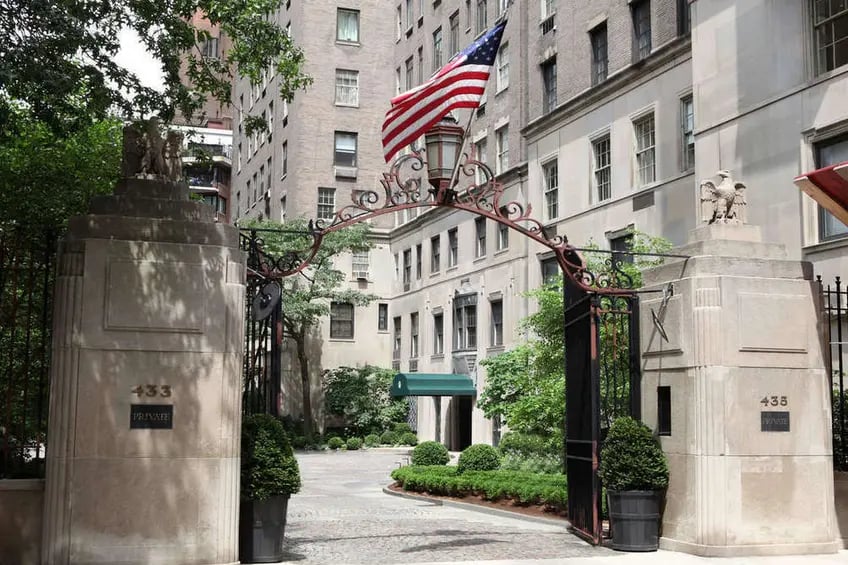
Selling a prewar co-op in Gramercy is not about making an older apartment compete with new construction on its terms. It is about understanding what makes the property distinctive, presenting those qualities with intention, and pricing it for the buyers who value what prewar homes do best.
That approach was particularly relevant at 105 East 15th Street, where Danielle Nazinitsky represented the seller of Residence #93. The one-bedroom co-op came to market in March 2026 at $725,000 and ultimately closed for $730,000 slightly above the original asking price.
The result offers a useful look at what matters when bringing a prewar Gramercy apartment to market today.
Start With What Cannot Be Recreated
Residence #93 is located in The Swannanoa, a Neo-Renaissance co-op dating to 1898. Like many successful prewar homes, its appeal was not simply a matter of square footage.
The apartment featured a parlor-style configuration with sliding doors connecting the living room and bedroom, a king-size bedroom with three exposures, a windowed kitchen with space to dine, a windowed vintage bathroom, and abundant natural light.
These are details that give a home personality.
For sellers, the important question is not simply whether an apartment has original or older features. It is whether those features can be presented in a way that helps buyers understand their value.
A vintage bathroom may not offer the same immediate appeal as a newly renovated one. An unconventional floor plan may require more explanation than an open-concept layout. But character, proportions, natural light, multiple exposures, and architectural details are difficult to reproduce in newer developments.
Good marketing makes those differences feel intentional rather than outdated.
Layout Matters More Than a Number on a Floor Plan
Buyers searching for one-bedroom apartments in Manhattan often encounter properties with relatively similar square-footage figures. How that space actually functions can create a very different experience.
This is particularly important with prewar apartments.
Instead of focusing exclusively on size, sellers should consider the everyday moments the layout creates. Is there room for a proper dining table? Does the bedroom comfortably accommodate a king-size bed? Are there windows in spaces where buyers usually expect none? Can rooms be separated when privacy is needed?
At Residence #93, the windowed kitchen, dining area, bedroom exposures, and flexible connection between the living and sleeping spaces gave buyers more to evaluate than a simple one-bedroom label.
Photography, floor plans, staging, and listing copy should all work together to communicate that experience before a buyer ever walks through the door.
Price the Apartment, Not Just the Address
Pricing a prewar co-op requires more nuance than looking at the last one-bedroom sale in the building.
Two apartments in the same co-op can perform very differently depending on floor, condition, exposure, light, layout, renovation history, monthly costs, and presentation.
Recent activity at 105 East 15th Street demonstrates that point. Another approximately 500-square-foot one-bedroom in the building, Residence #33, closed in February 2026 for $575,000 after being listed at $599,000. Residence #93 later closed at $730,000.
Those transactions should not be treated as direct equivalents. Instead, they demonstrate why sellers need to understand what buyers are actually comparing when deciding how much a particular apartment is worth.
A strong pricing strategy considers comparable sales, but it also identifies the features that move a property above or below those comparisons.
Pricing too aggressively can cause a listing to sit while buyers move toward alternatives. Pricing thoughtfully can create stronger early interest and give the market an opportunity to validate the property's value.
Understand the Competition Beyond Gramercy’s Prewar Inventory
Today's buyer rarely compares one Gramercy prewar co-op only with another.
They may also be considering a renovated condo downtown, a newer development with more amenities, or an apartment in a neighboring area with a different ownership structure.
Newer inventory often has obvious selling points: contemporary kitchens, central air, amenity spaces, modern bathrooms, and turnkey finishes.
Trying to imitate those properties can weaken the story of a prewar home.
Instead, sellers should emphasize the qualities newer inventory often cannot reproduce: established architecture, distinctive layouts, solid room proportions, mature streetscapes, natural light, and a sense of place.
The Swannanoa provides a good example of how those worlds can coexist. Its historic character is complemented by practical conveniences including updated elevators, a virtual doorman, a live-in superintendent, laundry, and storage.
For today's buyer, that combination can be compelling: architectural personality without giving up every modern convenience.
Presentation Should Reduce Buyer Uncertainty
A successful listing does more than make an apartment look attractive.
It helps buyers understand it.
That means deciding which details need to be celebrated, which need context, and which objections can be addressed before they become obstacles.
For a prewar apartment, this might mean showing how an unusual room configuration works through staging. It might mean photographing original details carefully rather than cropping around them. It could mean explaining the practical advantages of multiple exposures or showing exactly where dining, working, and entertaining can happen.
The goal is not to hide the age of the property. It is to make its age part of a coherent story.
When buyers understand why a home is different, they are better positioned to see value in those differences.
Prepare for the Co-op Conversation Early
Selling a co-op also involves something a beautiful listing cannot solve on its own: the building.
Buyers are evaluating monthly maintenance, financing requirements, building policies, financial health, and ultimately the board approval process alongside the apartment itself.
At Residence #93, monthly maintenance was listed at $1,648. That expense forms part of the buyer's overall assessment of value and affordability.
Sellers therefore benefit from preparing relevant information early and working with an agent who understands how to communicate both the apartment and the ownership structure.
The strongest offer is not necessarily useful if the buyer is poorly positioned for the building's financial requirements or board process.
Thinking about these issues before an offer arrives can make the transaction considerably smoother later.
Selling Character in a Market That Rewards Convenience
Gramercy's prewar housing stock occupies a distinctive place in the Manhattan market.
Buyers have more choices than ever, including highly polished apartments designed around contemporary expectations. But that does not make prewar homes less relevant. It makes positioning them correctly more important.
Residence #93 at 105 East 15th Street illustrates the opportunity.
Rather than trying to make an apartment in an 1898 building feel like something it wasn't, the marketing could focus on what made the home difficult to replicate: light, exposures, layout, windows, architectural character, and the experience of living in an established Gramercy co-op.
The apartment ultimately sold for $730,000 against a $725,000 asking price.
For Gramercy sellers, the lesson is straightforward: you do not need to erase a prewar home's history to appeal to today's buyer. You need to understand which parts of that history create value and make sure buyers see them.
For homeowners considering selling a co-op in Gramercy, Danielle Nazinitsky brings firsthand experience positioning prewar properties for the realities of today's Manhattan market. From pricing and presentation to buyer qualification and the co-op process, the strategy starts with understanding what makes each apartment worth choosing.